Researchers from the Alfred Wegener Institute (AWI) have completed the first large-scale mapping of driftwood deposits along Arctic coastlines, providing a detailed understanding of their ecological significance and distribution patterns. Driftwood plays a crucial role in Arctic coastal ecosystems, serving as a carbon store, stabilizing coastlines, and providing habitats for various animals. It also acts as a valuable indicator for environmental changes, offering insights into storm surges, coastal erosion, and shifting river dynamics in the region. Despite its importance, comprehensive knowledge of driftwood’s large-scale distribution has been limited—until now.
The AWI team systematically mapped driftwood along an 11,000-kilometer stretch of coastline in Alaska and Northwest Canada. By combining satellite imagery with artificial intelligence-powered evaluation methods, they created the largest database of Arctic driftwood ever produced. The study identified more than 19,000 stable driftwood deposits across the region, revealing patterns in how driftwood accumulates and persists over time. The findings are set to be published in the Scientific Reports journal.
Driftwood in the Arctic is primarily composed of pine, fir, and larch logs originating from forests. These logs are carried down rivers into the ocean, eventually being deposited along the coastline as individual logs or dense blankets of wood. Some of the larger accumulations cover areas of up to 15 hectares, equivalent in size to around 20 football fields. According to Carl Stadie, the study’s lead author and a PhD student in AWI’s Permafrost Research Section, this research provides the most comprehensive overview of driftwood distribution and accumulation in the Arctic to date.
To conduct the study, the team collected roughly 2.3 terabytes of satellite data between 2019 and 2023, covering approximately 1.3 million square kilometers of the North American Arctic coastline. This data was used to train a neural network capable of automatically recognizing driftwood in satellite images. The team verified the accuracy of the network using high-resolution aerial imagery captured during AWI flight campaigns. This approach confirmed that driftwood is not randomly distributed along Arctic coastlines but tends to accumulate primarily near large river deltas.
The study found that over 80% of driftwood accumulates within 200 kilometers of river mouths, suggesting that rivers serve as the main transport system for driftwood reaching the ocean. Beyond this distance, the density of deposits drops significantly, indicating that ocean currents and ice may play a smaller role in distributing driftwood than previously believed. The study also observed differences in the type and density of deposits depending on their location. Deposits near river deltas were generally smaller and more densely packed, while larger, more stable mats were found along open coastlines. The volume of driftwood also depended heavily on the density of forested areas in the surrounding river catchments.
This research represents the most comprehensive assessment of Arctic driftwood to date, providing a robust database to systematically record its ecological roles and monitor changes over time. Beyond its ecological functions, driftwood could serve as a key indicator of climate-driven changes affecting rivers, forests, and coastal landscapes. By understanding where and how driftwood accumulates, researchers can gain insights into environmental shifts and better predict the impacts of climate change on Arctic ecosystems.
The study highlights the importance of integrating satellite imagery with artificial intelligence in environmental research, offering a scalable method to monitor remote and difficult-to-access areas. With continued advancements in technology and long-term monitoring, driftwood mapping could become an essential tool for assessing the health of Arctic coastal environments and understanding the broader effects of climate change on these fragile ecosystems.
By establishing a systematic method for recording driftwood, the AWI researchers have laid the groundwork for future studies that could track shifts in driftwood distribution, identify emerging ecological trends, and contribute to climate resilience strategies in Arctic regions. The findings underscore the interconnectedness of rivers, forests, and coastlines and provide a clear example of how seemingly ordinary natural elements can serve as critical indicators of environmental change.
The research not only fills a significant knowledge gap about Arctic driftwood but also opens new opportunities for using this resource to study and manage Arctic ecosystems more effectively. Through this work, driftwood is recognized not merely as debris but as a vital component of coastal ecology and a lens through which the impacts of climate change can be observed and understood.
The study demonstrates that combining high-resolution satellite data, AI analysis, and on-site verification can produce detailed, actionable insights about natural systems in even the most remote regions. This approach sets a precedent for future large-scale ecological monitoring and provides a blueprint for other regions where driftwood and similar materials play an important ecological role.


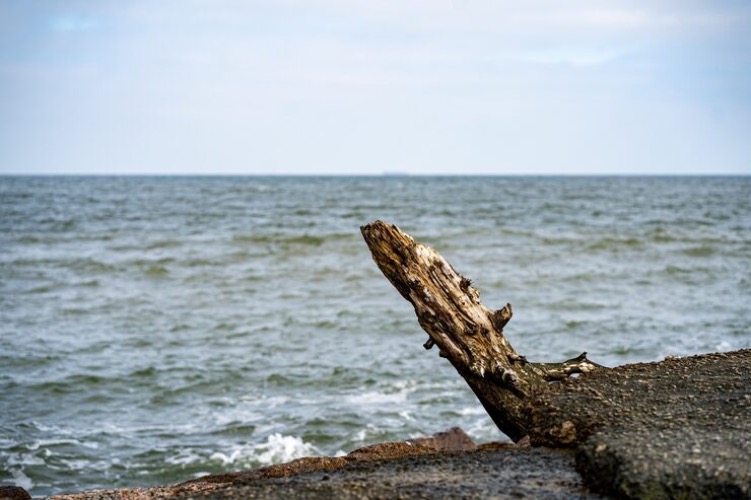 Artic
Artic